


Why Even New Construction Homes in Canton, Cumming, Alpharetta & Woodstock, GA Still Need a Home Inspection
Don't Assume Your New Home Is Problem-Free: Why Every New Construction Needs a Professional Inspection
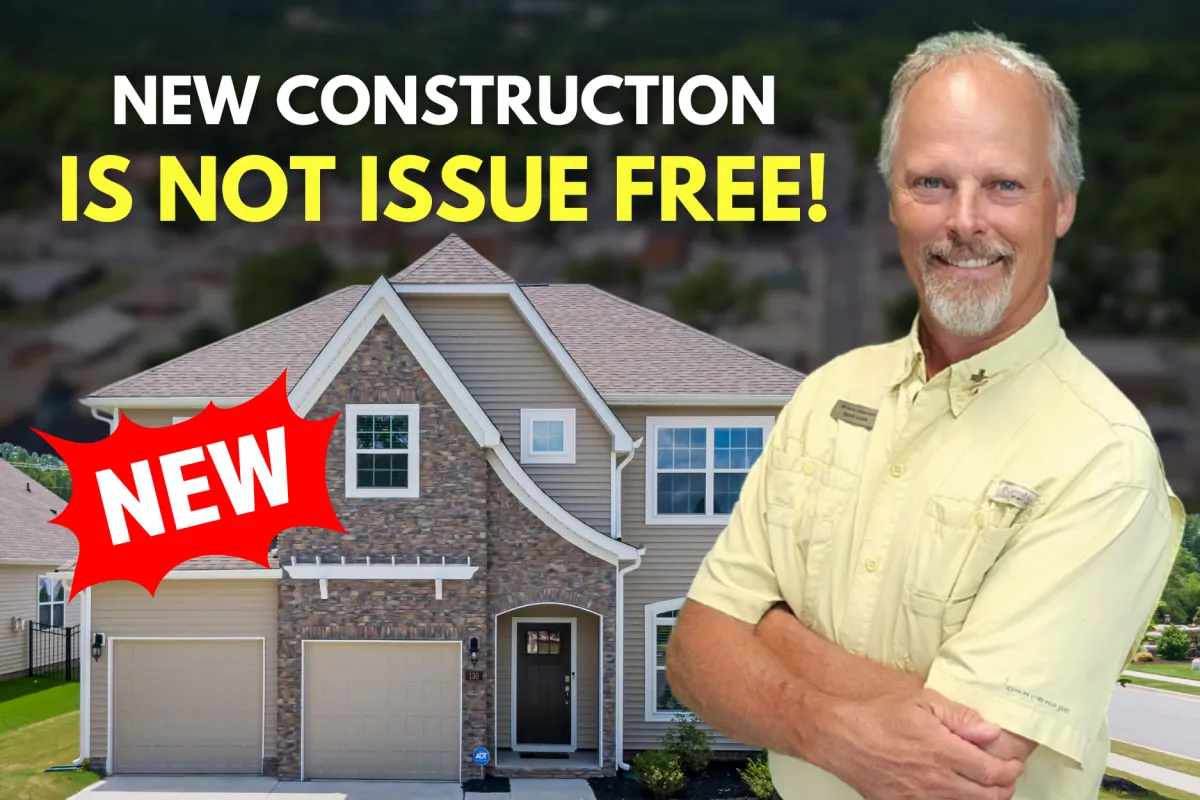
Hey there — I'm David Lelak, owner of IHI Home Inspections and your trusted home inspector for Canton, Cumming, Alpharetta, and Woodstock, GA.
It's a common belief that new construction homes are flawless because everything is brand new — but after performing thousands of inspections over the past 19 years, I can tell you that's simply not true.
Even brand-new homes can have issues lurking behind the walls, under the floors, or in the attic. Builders work with tight timelines and multiple subcontractors, which sometimes means small mistakes can slip through the cracks — mistakes that can cost you thousands if not caught early.
That's why scheduling a new construction home inspection before your final walk-through (or before your builder warranty expires) is one of the smartest investments you can make.
The Myth of the "Perfect New Home"
Why Buyers Assume New Means Flawless
When you purchase a newly built home, it's natural to assume that everything is in perfect working order. After all, no one has lived there before. The appliances are fresh out of the box, the roof hasn't seen a single storm, and the foundation was just poured. What could possibly be wrong?
The reality is that new construction is the product of dozens of different subcontractors — framers, plumbers, electricians, HVAC technicians, roofers, and more — all working under tight deadlines on a job site that changes daily. Mistakes happen. Corners get cut. Inspections get rushed or skipped entirely.
The Real Cost of Skipping an Inspection
Homebuyers who skip a third-party inspection are essentially taking the builder at their word that everything was done correctly. In many cases, they're right. But in enough cases — including some I've personally documented here in the Canton and Woodstock areas — that assumption leads to expensive surprises within the first year or two of homeownership.
We're talking about:
Mold remediation costs that can reach $10,000–$30,000
HVAC repairs or replacements ranging from $5,000–$15,000
Structural drainage corrections costing thousands in excavation and grading
Electrical rewiring for safety code violations
A professional home inspection typically costs a few hundred dollars. It's one of the highest-return investments you can make as a new homeowner.
Why New Construction Homes Still Need Professional Inspections
Even when your home is fresh off the builder's lot, it doesn't mean it's flawless. I often find issues that can affect safety, performance, and long-term durability — the kind of problems most homeowners won't notice until it's too late.
Here's what I frequently uncover during new home inspections in Woodstock, Cumming, Alpharetta, and Canton:
1. Moisture Problems in Crawlspaces and Basements
New Homes Aren't Immune to Water Intrusion
New homes aren't immune to moisture. I've inspected new properties where crawlspaces already had water pooling, improper vapor barriers, or venting that allowed humidity to collect — all within weeks of the certificate of occupancy being issued.
This isn't a rare fluke. Georgia's climate is notoriously humid, and builders who don't account for proper drainage, vapor control, and ventilation from the start are setting homeowners up for problems down the road.
What Happens When Moisture Goes Undetected
Excess moisture leads to mold growth, warped framing, and insulation damage — all costly repairs that can start within the first year. What begins as a slight dampness in the crawlspace can evolve into:
Black mold colonies that spread across floor joists and subfloor materials
Wood rot that weakens the structural integrity of your floors
Damaged insulation that drives up energy bills year-round
Air quality issues that affect your family's respiratory health
How I Detect Hidden Moisture Issues
My infrared thermal imaging technology allows me to detect hidden leaks and condensation spots before they become serious issues. Unlike a visual inspection alone, infrared scanning reveals temperature differentials that indicate moisture behind walls, under floors, and around plumbing connections — areas that would otherwise go completely unnoticed.
2. Electrical Safety and Grounding Issues
Common Electrical Oversights in New Construction
One of the most common discoveries I make in new homes? Electrical oversights. I've found missing junction box covers, ungrounded outlets, mislabeled breakers, and loose wiring — even in luxury builds that sold for over half a million dollars.
These aren't just inconveniences. They're fire hazards and safety risks that the builder's own inspectors may have missed or deprioritized under deadline pressure.
What a Proper Electrical Inspection Covers
Your safety depends on a properly installed electrical system. That's why I meticulously check for:
Panel and Wiring Integrity
Secure wire connections throughout the home
Proper conductor sizing for each circuit
Absence of double-tapped breakers
Correct labeling for every breaker and circuit
Outlet and Device Safety
Functional GFCI outlets in kitchens, bathrooms, garages, and exterior locations
AFCI protection in bedrooms and living areas as required by current code
Proper grounding at all outlets
Grounding and Bonding at the Main Panel
Verified grounding electrode system
Proper bonding of metallic systems
Correct neutral-to-ground connections
Why Electrical Issues Are Especially Dangerous in New Homes
Because new homes are freshly painted and finished, it's easy to assume the wiring behind those clean walls was done correctly. But finish work can actually mask electrical problems — literally covering up issues with drywall and paint. A thorough inspection before you move in is the only reliable way to know your electrical system is safe.
3. HVAC & Ductwork Deficiencies
Why Proper Airflow Matters More Than You Think
Proper airflow makes a huge difference in comfort and efficiency — especially in Georgia's humid climate. Your HVAC system may be brand new, but if the ductwork wasn't installed correctly, you'll feel the effects every single month in the form of higher energy bills and uneven temperatures.
I inspect duct systems to ensure they're properly supported, sealed, and connected — and I find problems more often than most buyers would expect.
The Consequences of Poor Ductwork
Poor ductwork doesn't just make your home uncomfortable. It can cause:
Uneven room temperatures — some rooms freezing, others sweltering
Higher energy bills — conditioned air escaping into unconditioned attic or crawlspace
Increased humidity and dust — gaps in ducts allow attic air and debris into your living spaces
HVAC strain and early system failure — a system constantly fighting against leaky ducts wears out years ahead of schedule
What I Look for During HVAC Inspections
Ductwork Condition and Connection
Properly connected supply and return ducts with no disconnections
Sealed joints with mastic or metal tape (not standard cloth duct tape, which deteriorates)
Adequate insulation on ducts in unconditioned spaces
System Performance
Correct refrigerant charge and airflow across the coil
Proper thermostat calibration and operation
Clean filters, coils, and drain pans
Code Compliance for 2025 Standards
In 2025, with stricter efficiency standards and smart-home systems now commonplace, airflow and insulation must meet updated performance codes. My inspections verify compliance so you're not hit with a costly retrofit later.
4. Signs of Wildlife or Pest Entry
Even Brand-New Homes Can Have Uninvited Guests
You'd be surprised how often I find evidence of wildlife — even in brand-new neighborhoods. Gaps near crawlspace vents, attic soffits, or foundation edges can become open invitations for pests almost immediately after construction wraps up.
In North Georgia's growing suburban communities, construction disturbs the natural habitat of all kinds of critters. They don't wait long to explore newly built structures.
Common Pest Entry Points in New Construction
Crawlspace Vulnerabilities
Unsealed or damaged vent covers
Gaps where pipes and conduit enter the foundation
Improperly installed vapor barriers that create dark, damp hiding spots
Attic and Roof Entry Points
Unsealed soffits and fascia boards
Gaps around roof penetrations (plumbing vents, exhaust fans)
Missing or poorly installed ridge vent covers
Foundation and Exterior Issues
Gaps around utility penetrations at the foundation wall
Poorly sealed garage door sweeps
Low-hanging vegetation or mulch beds that create ground-level access
Why Pest Intrusion Is a Bigger Problem Than It Looks
Rodents, snakes, and insects can quickly make themselves at home and damage insulation, wiring, and HVAC systems. Rodents in particular will chew through electrical wiring — creating fire hazards — and nest inside ductwork, contaminating your air supply.
A quick inspection before move-in prevents a big, expensive, and potentially dangerous headache later.
5. Structural & Drainage Oversights
Small Details With Big Consequences
Sometimes it's the small details — missing flashing, uneven grading, or misaligned gutters — that cause the biggest long-term damage. These issues don't look dramatic on inspection day, but their cumulative effect over months and years can be devastating.
If water doesn't drain away from your foundation properly, it can lead to cracks, settling, or moisture intrusion in as little as one rainy season. In Georgia, where we can receive several inches of rain in a single afternoon, proper drainage isn't optional — it's critical.
Drainage and Grading Issues I Commonly Find
Improper Lot Grading
Soil graded toward the foundation rather than away from it
Low spots in the yard that allow water to pool near the home
Improperly compacted fill soil that settles unevenly after the first few rains
Gutter and Downspout Problems
Missing or incorrectly positioned downspout extensions
Gutters pitched toward the house rather than toward the downspout
Clogged or disconnected gutters on a brand-new home
Roof and Flashing Deficiencies
Missing step flashing at roof-to-wall intersections
Improperly installed valley flashing
Inadequate counter-flashing at chimneys
Structural Red Flags in New Builds
Beyond drainage, I also check for structural concerns that can appear even in new construction:
Foundation Observations
Cracks in the foundation that appear before the home has even been occupied
Signs of settlement or movement in the slab or footings
Framing Concerns
Notched or bored structural members that weaken load-bearing capacity
Missing hangers or fasteners at beam-to-post connections
Improperly supported floor systems in areas over crawlspaces
When Should You Schedule a New Construction Home Inspection?
The Three Key Inspection Windows
There are three ideal times to schedule a professional inspection for your newly built home. Missing any one of these windows means potentially losing your best opportunity to get defects corrected at the builder's expense.
Pre-Drywall Inspection
This is arguably the most valuable inspection available to new construction buyers. Before the walls are closed, I have a full and unobstructed view of:
Framing, including load-bearing walls and floor systems
Rough plumbing — all drain, waste, and supply lines
Rough electrical — wiring runs, panel installation, and box placement
HVAC rough-in — ductwork routing, equipment pads, and refrigerant lines
Insulation placement before it's covered by drywall
Once the drywall goes up, many of these systems become completely inaccessible without destructive opening. A pre-drywall inspection is your one chance to see everything.
Final Walk-Through Inspection
Before you close on your home, a final inspection identifies any defects while the builder is still responsible for repairs. This is the inspection most buyers schedule — and for good reason. It's your last chance to present the builder with a documented punch list of items to correct before you take ownership.
Items I commonly flag at this stage include:
Incomplete finish work
Improperly functioning windows and doors
Plumbing leaks at fixture connections
Missing or improperly installed exhaust fans
Electrical outlets and fixtures that don't function
11-Month Builder Warranty Inspection
Just before your one-year builder warranty expires, schedule a thorough inspection to ensure hidden problems are covered before your coverage ends. Many issues — particularly those related to settling, drainage, and moisture — don't manifest until a home has been through one full cycle of seasons.
This is often the most overlooked inspection window, and it's one that can save homeowners thousands of dollars in repairs that would otherwise come out of pocket after warranty expiration.
What Sets IHI Home Inspections Apart
19 Years of Trusted Experience in North Georgia
As your local Canton and Woodstock home inspector, I take pride in providing a level of detail that helps protect your investment for years to come. Over the course of more than 4,800 inspections, I've developed a systematic, thorough approach that doesn't miss the details that matter.
Advanced Technology for Superior Results
Infrared Thermal Imaging
Standard visual inspections have limits. My infrared thermal camera sees beyond them — detecting moisture intrusion, missing insulation, overloaded electrical circuits, and HVAC inefficiencies that would otherwise be completely invisible.
Comprehensive Digital Reporting
Within 24 hours of your inspection, you'll receive a detailed digital report complete with:
High-resolution photographs of every defect documented
Clear, jargon-free descriptions of each finding
Severity ratings to help you prioritize repairs
Recommendations for follow-up or remediation
Industry-Leading Warranty Coverage
IHI Home Inspections backs every inspection with protections you won't find everywhere:
90-Day Home Warranty
Coverage for major systems and appliances in the first 90 days after your inspection.
MoldSafe Warranty
Protection against mold growth discovered after your inspection — covering remediation costs up to $2,000.
SewerGard Warranty
Coverage for unexpected sewer and water line failures discovered after the inspection.
Platinum Roof Protection
Coverage for roof leaks that develop after your inspection, providing an additional layer of confidence in your new home's most critical weather barrier.
Frequently Asked Questions About New Construction Inspections
Do I really need an inspection if the city already inspected the home?
Yes — absolutely. Municipal code inspectors verify that minimum building code requirements are met, but they don't provide the comprehensive, systems-level evaluation that a private home inspector does. Code inspectors are checking boxes; I'm checking your investment.
Can I attend the inspection?
Absolutely, and I encourage it. Walking through the home with me gives you a firsthand understanding of your home's systems, maintenance needs, and any deficiencies I find. You'll leave with more knowledge about your new home than most owners ever acquire.
How long does a new construction inspection take?
A thorough inspection of a new construction home typically takes 2.5 to 4 hours depending on the size and complexity of the property. Homes with crawlspaces, large attics, or finished basements take additional time.
What if the builder pushes back on my inspection findings?
This is common, and it's exactly why having a documented, professional report matters. My reports are thorough, photographed, and objective — giving you the evidence you need to hold your builder accountable under the terms of your purchase agreement or warranty.
Protect Your Investment Before the Warranty Runs Out
If you've recently bought or built a home in Canton, Cumming, Alpharetta, or Woodstock, now is the time to act. Builder warranties are time-limited, and the clock starts ticking the moment you close.
I'll walk your roof, crawl your crawlspace, and inspect every system so you know exactly where your new home stands — no assumptions, no surprises.
Your home might be brand new — but peace of mind never goes out of style.
Book Your Inspection Today
Let's make sure your new home isn't hiding something costly.
📞 Call: 404-788-2581 🖱️ Schedule Online: ihihomeinspections.com
Connect with IHI Home Inspections:
📘 Facebook
📸 Instagram
💼 LinkedIn
🎥 YouTube


